Locally Owned And Operated 🇺🇸
.png)
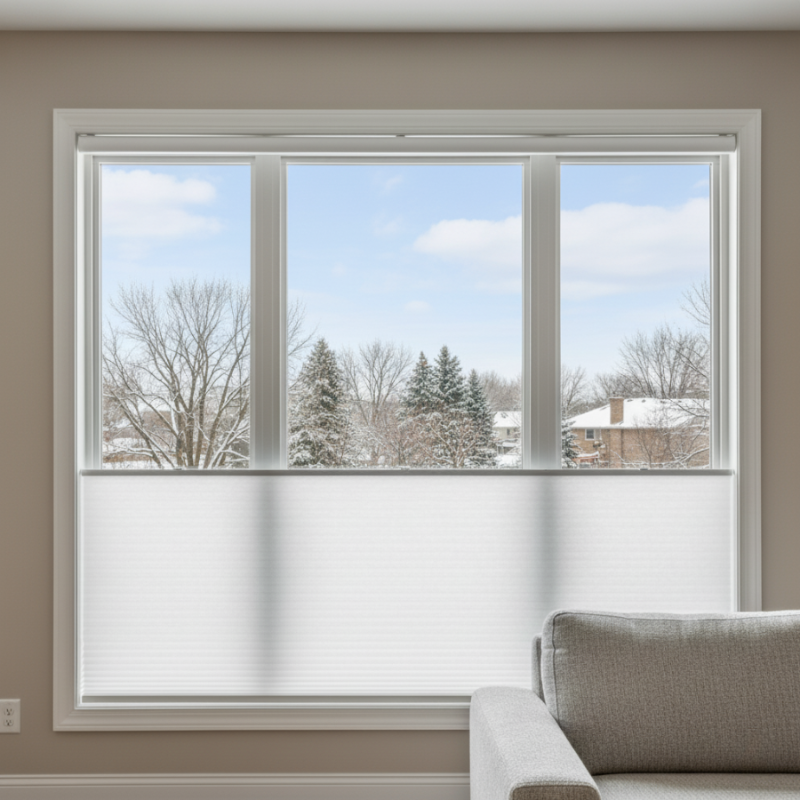
If you've experienced more than one winter in Fort Wayne, you know the challenge well. That penetrating cold that finds every crack and crevice. The heating bill that makes you wince in January. The ice storms that arrive with little warning and linger for days.
I've been helping homeowners throughout Fort Wayne, Huntertown, and Allen County with their window treatments for years, and the number one winter complaint I hear is about cold drafts from windows. Even relatively new homes struggle with this problem.
The encouraging news? Cellular shades can make a significant difference in keeping your home warm and your energy bills manageable.
Indiana winters aren't just cold—they're unpredictable and harsh on homes. One day brings 15-degree temperatures, the next delivers an ice storm, then suddenly it jumps to 40 degrees. This constant freeze-thaw cycle takes a toll on houses, and windows are often the weakest point in your home's thermal envelope.
Windows lose more heat than any other part of your house. Research shows that up to 30% of your home's heating energy can escape directly through window glass. When you're paying to heat your Fort Wayne home during December and January, that represents real money literally disappearing through your windows.
Cellular shades—also called honeycomb shades—are engineered specifically to trap air and create insulation. If you examine them from the side, you'll immediately see why they're called honeycomb shades. They feature small pockets running horizontally across the entire shade. These pockets trap air and create an insulating barrier between your room and the cold window glass.
The principle mirrors how double-pane windows or insulated walls work. Air actually provides excellent insulation when it's trapped and prevented from circulating. The cellular design keeps that air stationary and working for you.
Customers regularly tell me they notice a comfort difference the very first night after installation. When you block that cold air from radiating into the room, the change is immediate and noticeable.
You can purchase cellular shades in single-cell or double-cell construction, and the distinction matters for Fort Wayne winters.
Single-cell shades have one layer of honeycomb pockets. They insulate well, cost less, and work perfectly for most situations in moderate climates or interior-facing windows.
Double-cell shades feature two layers of pockets—essentially honeycomb stacked on honeycomb. They cost more upfront, but they provide significantly better insulation. If you have windows on the north side of your Fort Wayne home, or if you live in an older house in Huntertown or Leo-Cedarville where drafts seem worse, double-cell shades deliver value that justifies the price difference.
I recently installed double-cell cellular shades for a Grabill family with a large picture window facing north. They reported that their living room transformed from uncomfortable all winter to genuinely cozy. Their children started playing in that room regularly instead of avoiding the cold space.
Most homeowners don't realize cellular shades come in different cell sizes. The most common options are 3/8", 1/2", and 3/4".
Larger cells (3/4") trap more air, providing superior insulation. They also create a more substantial appearance on larger windows. I typically recommend these for picture windows and sliding glass doors where both insulation and visual impact matter.
Smaller cells (3/8") work better for smaller windows and stack more compactly when raised. They're perfect for bathroom windows or anywhere you prefer a sleeker profile.
Medium cells (1/2") hit the sweet spot between insulation performance and appearance for most Fort Wayne homes. This size provides excellent energy efficiency while looking appropriate on standard windows.
I avoid making exaggerated savings claims, so here are realistic numbers based on actual customer experiences around Allen County.
The Department of Energy reports that cellular shades can reduce heat loss through windows by up to 40% depending on style and installation method. In practice with my Fort Wayne customers, I typically hear about heating bills dropping 10-20% after installing cellular shades in main living areas and bedrooms.
One New Haven customer tracked her natural gas bill for two complete winters—before and after installing cellular shades. She calculated savings of approximately $25-30 per month during the coldest months. While not dramatic, it accumulates meaningfully. Over five years, those shades essentially paid for themselves through energy savings alone.
Here's a feature most people overlook initially but end up loving—top-down/bottom-up operation.
Traditional window shades only lower from the top downward. With top-down/bottom-up cellular shades, you can lower the shade from the top OR raise it from the bottom. You can even operate both simultaneously, leaving the middle section open for light.
Why does this matter during Fort Wayne winters? You get privacy and insulation simultaneously. Lower the top portion to block cold air and maintain privacy, while raising the bottom to allow in that valuable low-angle winter sunlight. This works perfectly for street-facing windows in your living room or bedroom.
I installed these for a family on Fort Wayne's west side with a prominent front window. They wanted privacy without feeling closed off from natural light. Now they keep the top two-thirds closed for privacy and insulation while the bottom third welcomes daylight. They actually use that room throughout winter instead of keeping curtains drawn constantly.
Cellular shades come in different opacity levels, which affects both light transmission and insulation performance.
Light-filtering cellular shades allow diffused light through while maintaining privacy during the day. They soften harsh sunlight and reduce glare. These work well for living rooms and kitchens where natural light is desirable during daytime hours.
Blackout cellular shades block all light and provide maximum insulation. The blackout lining adds an extra layer that increases the R-value (insulation rating). These excel in bedrooms or any room where darkness is beneficial.
For pure energy savings during winter, blackout cellular shades outperform light-filtering options. However, for most living spaces, light-filtering shades work excellently and still provide noticeable warmth improvement.
Homeowners frequently ask whether they should replace old windows or install cellular shades first.
Here's my straightforward answer—replacing windows is expensive. Very expensive. Unless your windows are literally deteriorating or failing, you'll get significantly more value by starting with cellular shades. I've seen Woodburn and Harlan homeowners postpone window replacement for years because cellular shades resolved their comfort issues effectively.
That said, if you have single-pane windows from the 1960s that rattle in the wind and show visible gaps, you should probably budget for replacement eventually. But install cellular shades first. They'll provide immediate relief, and you'll still need quality window treatments after getting new windows anyway.
I worked with a couple in an older home near downtown Fort Wayne who were convinced they needed complete window replacement. We installed double-cell blackout shades in their bedroom as a test. They were so satisfied with the improvement that they postponed the window project and installed cellular shades throughout the entire house instead. They saved thousands of dollars while solving their comfort problem.
Cellular shades only work when you actually use them. Here are practical tips I share with all my Fort Wayne customers:
Lower your shades every night. Make this a consistent habit when the sun sets. Even the highest-quality cellular shades only insulate when they're down.
Close them completely. Leaving shades halfway doesn't provide much benefit. The insulation works best when the shade is fully extended and sealed at the sides.
Open them during sunny winter days. This might seem counterintuitive, but on sunny January days, welcome that free solar heat. South-facing windows especially can gain heat even when outdoor temperatures are freezing. Close everything before sunset to trap that warmth inside.
Install inside the window frame when possible. This is called an inside mount. It creates a better seal against drafts and looks cleaner. If inside mount isn't feasible, ensure outside mount shades extend past the window frame on all sides to minimize air leakage.
You don't need to outfit every window at once. Most Fort Wayne customers start with their main living areas and bedrooms—spaces where you spend the most time and where comfort matters most. Additional rooms can be added as budget allows.
Bedrooms are especially important. Nobody wants to sleep in a cold room. Quality blackout cellular shades serve double duty—they block light AND maintain warmth. Countless customers have told me they sleep noticeably better after getting these installed.
Living rooms and family rooms rank next on the priority list. These typically feature the largest windows, which means the greatest potential for heat loss. A large picture window can feel like a cold spot that affects the entire room. Cellular shades eliminate this issue.
Patio doors represent enormous energy loss points. They're essentially giant windows at ground level where cold air naturally pools and settles. Vertical cellular shades designed specifically for sliding doors make a dramatic difference.
A Harlan customer told me her family room went from uncomfortably cold to actually pleasant just by covering their patio door with vertical cellular shades. She could finally use that room during winter without setting the thermostat to 75 degrees.
These cost more than standard window shades due to their size, but if you have a sliding door making a room uncomfortable during winter, they're absolutely worth the investment.
Motorization represents a luxury rather than a necessity for most homeowners. However, if you have numerous windows or high windows that are difficult to reach, motorization ensures you'll actually use your shades consistently. Consistent use is what generates energy savings.
Additionally, you can program motorized cellular shades to close automatically at sunset and open at sunrise. Set your schedule once and forget about it. For Fort Wayne's unpredictable weather patterns and early winter sunsets, automation eliminates the need to think about shade operation.
The color of your cellular shades affects how much heat they reflect or absorb, which impacts their performance.
Lighter colors reflect more heat back into the room during winter (and away from the room during summer). White and off-white cellular shades remain popular for this reason, plus they look clean and coordinate with most interior decor styles.
Darker colors absorb more heat. This can actually benefit south-facing windows during winter—the shade absorbs solar energy during the day and radiates it into the room afterward.
From a practical standpoint, most Fort Wayne homeowners choose neutral colors (white, cream, beige, gray) because they complement any decor while providing solid energy efficiency.
Indiana winters are challenging, and your windows work against your comfort and budget every time temperatures drop. Cellular shades won't just reduce your heating costs—they'll make your home noticeably more comfortable, which might prove even more valuable than the financial savings.
I've seen families go from avoiding certain rooms during winter to actually using their entire house comfortably. That represents a significant quality-of-life improvement that's difficult to quantify but easy to appreciate.
The advantage of cellular shades is they work immediately. Installation takes a few hours, and that same evening you'll notice the difference. No major renovation required, no construction mess, just instant improvement in home comfort.
If you're tired of cold drafts and escalating heating bills every winter, let's discuss your options. We bring samples directly to your Fort Wayne home or anywhere in Allen County, and I can show you exactly what will work best for your specific windows and situation. No pressure, just honest advice from someone who's been helping local homeowners for years.
Stay warm out there.
Ready to make your Fort Wayne home more comfortable this winter while reducing energy costs? Schedule your free in-home consultation today. We serve Fort Wayne, Huntertown, Leo-Cedarville, Grabill, New Haven, Woodburn, Harlan, and throughout Allen County.
Call us or visit beautifulblindsandshades.com to get started with energy-efficient cellular shades for your Indiana home.
.png)
We come to you and design your window treatments on the spot!
.png)